何がすごいか知ってる? 100万ユーザーだよ。
プロシューマーをターゲットとする生産性向上スタートアップにとって、100万ユーザー達成という節目は、通過儀礼のようなものです。それは、プロダクトマーケットフィットに近づいているという強い兆候を示します。このマイルストーンを達成するペースが、次に重要な要素です。達成が早ければ早いほど、ビジネスの勢いは増します。
歴史上、Slack、Zoom、Dropbox、Notionなど、急成長を遂げたプロシューマー向けテクノロジー企業はいくつかありますが、「史上最速で成長した生産性アプリ」の称号は、100万ユーザーを達成したAIストーリーテリングプラットフォームであるTomeのものでした。 ローンチから6ヶ月で。しかし、これは2023年2月の話です。それ以来、小さく、ほとんど知られていないあるスタートアップが、その半分の期間でそれを達成しました。そのスタートアップこそ、私たちだったのです。
Presentations AI はローンチし たのは2023年7月7日で、 100万ユーザーを 達成したのは2023年9月23日でした。つまり、1から わずか84日間で100万ユーザー — 3ヶ月足らずで、これまでの記録保持者のほぼ2倍の速さです。
参考までに、
- Slackは1年半
- Zoomは2年
- Notionは3年
私たちの成長は、ただ速かっただけではありません。超音速でした。しかし、速さだけが全てではありません。本当の物語は、どうやってそこにたどり着き、その後に何が起こったかです。
まず、いくつか注目すべき点があります。
- 私たちは、一般的に受け入れられているローンチやスケールアップの方法は一切使いませんでした。ProductHuntでのローンチも、バイラルなデモ動画も、インフルエンサーによる宣伝もありません。
- マーケティングチームも、セールスチームも、プロダクトチームもありませんでした。今日まで、これらの機能に属するメンバーは一人もいません。
- マーケティングには一切費用をかけませんでした。これらのユーザーを獲得するための総顧客獲得コストはゼロでした。
これらの事実が私たちがマーケティングの達人であることを証明していると主張したいところですが、それは不誠実でしょう。
私たちがマーケティングの達人であることを証明していると主張したいところですが、それは不誠実でしょう。実のところ、私たちは選択ではなく必要に迫られて倹約していました。数年前に少額の資金調達をしたものの、ローンチ準備が整う頃には資金がほとんど尽きていたのです。
では、資金がなく、無名のスタートアップが、史上最速で成長する生産性アプリになったのはなぜでしょうか?
答えは3つのステップに集約されます。説明するのは簡単ですが、実行するのは本当に難しいことです。
- 人々が(本当に)欲しがるものを作る
- 人々が愛するものを作る
- 人々に何かを欲しがらせる
人々が(本当に)欲しがるものを作る
Y Combinatorのポール・グレアムは かつてこう言いました。 スタートアップがすべき最も重要なことは「人々が欲しがるものを作る」ことだと。実際、これは今日までY Combinatorのモットーであり続けています。
真実だと認識するのは簡単です。しかし、現実世界で適用するのははるかに難しい。
私たちのケースを例にとってみましょう。
私たちはAIを活用したプレゼンテーションプラットフォームです。
アイデアではなく、問題を探しましょう。
プレゼンテーションツールが溢れかえる世界で、ユーザーは本当に別のツールを必要としていたのでしょうか?Microsoft PowerPointやGoogle Slidesのユーザーは何十億人もいますが、そのうち、どれだけの人が新しいプレゼンテーションツールを「求めている」とあなたは思いますか?
スタートアップの墓場は、「PowerPointキラー」で溢れていますが、それらは結局のところ、PowerPointの紙切れによる切り傷のようなものでした。少しイライラさせるものの、最終的には忘れ去られるような存在です。
私たちが気づいた本当に未解決の問題は、PowerPointを葬り去ることではなく、白紙のスライドの苦痛を終わらせることでした。人々はプレゼンテーションを作成するたびに、毎回ゼロから始めるのに苦労します。PowerPointのようなツールは、コンテンツとデザインを混同しており、これにより非デザイナーが自分の考えやストーリーを視覚的な要約として概念化し、変換することを困難にしています。PowerPointの皮肉な点は、世界で最も広く使われているデザインツールであるにもかかわらず、そのユーザーのほとんどは非デザイナーであるということです。
時には、早すぎることは間違っていることと同じです。
AIが注目されるずっと前から、私たちはプレゼンテーション作成の2つの側面で人々を助けるためにAIを活用するというアイデアを持っていました。
- 初稿を自動生成する(白紙のスライド問題を解決)
- コンテンツを適切なスライドテンプレート、視覚的な比喩、ブランドガイドラインに自動的に合わせる(ユーザーがデザイナーでなくても魅力的なプレゼンテーションを作成できるようにする)
私たちはGPT登場以前の世界で、何年にもわたってこのAIプラットフォームを構築しました。それは、石器と重力に対する漠然とした理解だけで宇宙船を作ろうとするようなものでした。エコシステムは存在せず、MLモデルからデータパイプラインに至るまで、すべてをゼロから構築しました。
市場の変化を認識し、それを活用する時が来ました。
生成AIの津波が押し寄せました。突然、逆風が追い風に変わったのです。何年も坂道を岩を押し上げていたところに、誰かが突然ロケットブースターを取り付けてくれたようなものでした。
技術的なパズルの欠けていたピースがはまっただけでなく、私たちのソリューションに対する消費者の関心という、もう一つの巨大な追い風がありました。これにより、私たちのCAC(顧客獲得コスト)はゼロにまで押し下げられました。
2023年7月にパブリックベータ版をリリースする頃には、文字通り何千人もの人々が私たちのドアをノックしていました。
私たちのドメイン名 - www.presentations.ai - 人々が理解も関心も示さなかったものから、一夜にして何千人もの人々が「求め」、検索するようなものへと変貌しました。私たちの手法や価値提案を苦労して説明する必要があった状態から、ドメイン名自体が、潜在顧客が私たちが何を提供しているかを理解するための自己完結型の手段となったのです。
以下のスナップショットは、私たちよりもはるかに多額の資金を調達し、知名度も高かった競合他社のほとんどと比較して、私たちのソリューションに対するファネル上部での関心がどれほど高かったかを示しています。
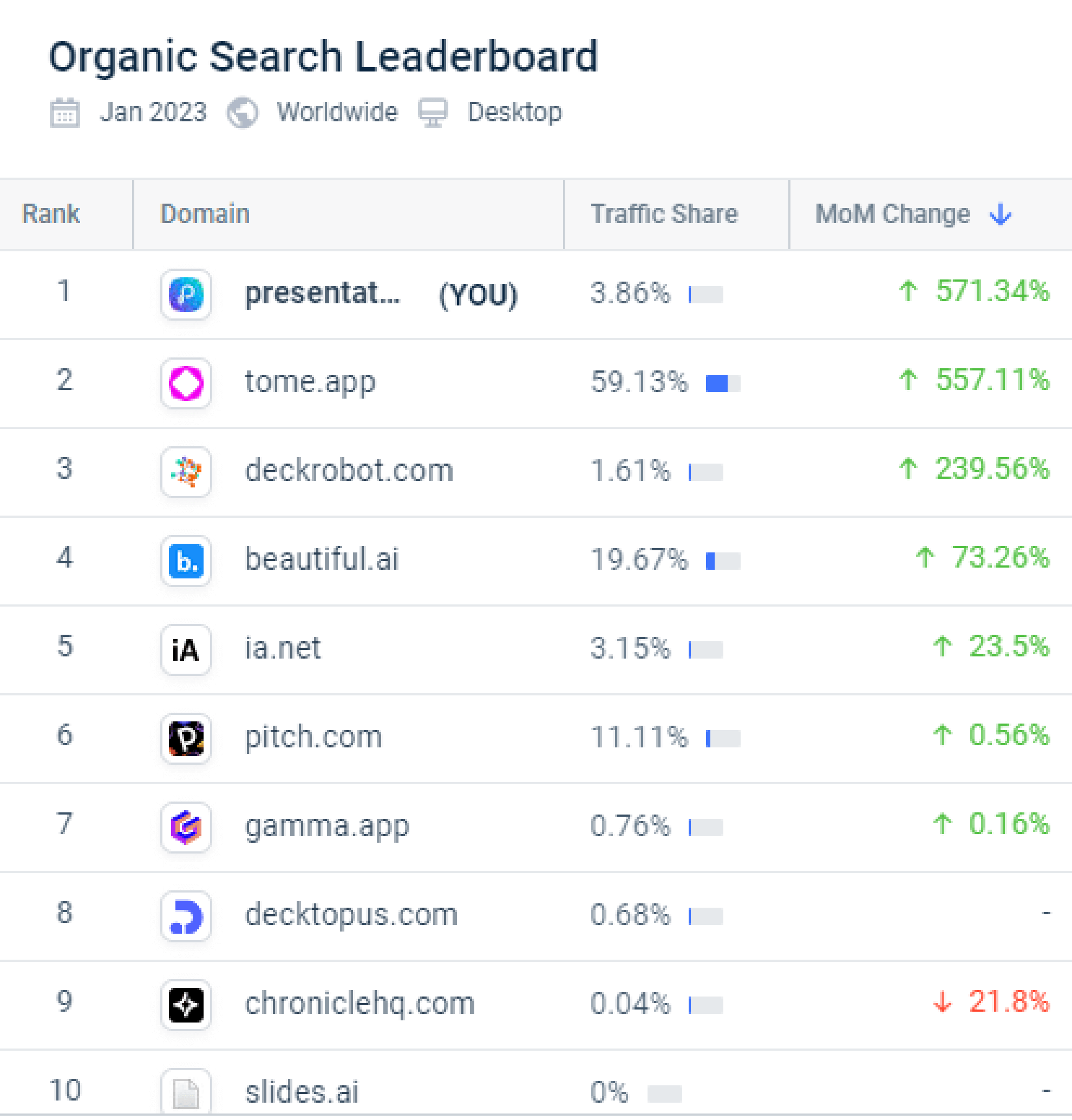
画像:2023年初頭における当社の市場でのオーガニック検索リーダーボード
私たちは、市場の状況がいかに急速に変化し、何年もの間、突飛なアイデアだと思われていたものが、ほとんど一夜にして次の大きなトレンドへと変わる様子を目の当たりにしました。
これは驚くべき先見の明と呼ぶべきか、単なる幸運と呼ぶべきか、結果的に私たちは人々が求めるものを作ることになりました。しかし、それ自体は必要条件であって十分条件ではありません。
次は何をすべきか?
人々が愛するものを作る
問題を解決することと、人々が心から楽しみにするような体験を生み出すこととは、全く別の話です。
プレゼンテーション作成に意気揚々と取り組むために目覚める人が、一体どれだけいるでしょうか?「パワーポイント地獄」は多くの人が共感する感情です。「パワーポイント地獄」に特化したコミュニティさえ存在し、彼らは資料作成よりも歯医者の治療を選ぶでしょう。
私たちは、その認識を変えることを決意しました。
ビジネス上不可欠なプレゼンテーション作成という行為を、苦痛から喜びに変えるにはどうすればよいか?単なるツールを、ユーザーの仕事やワークフローの中で愛される存在に変えるには?それが、私たちが一行のコードを書く前に自問した問いでした。
私たちの旅は、役員室やガレージから始まったのではありません。人々がプレゼンテーションに苦戦していた、数えきれないほどのカフェ、オフィス、会議室から始まりました。
私たちは観察し、耳を傾け、共感しました。そして、私たちが発見したことは目を見張るものでした。
- メッセージを洗練させる代わりに、デザインの選択に何時間も費やす経営者
- 生徒向けの魅力的なスライド作成で眠れない教師
- 重要な会議の数分前に、ピッチ資料の更新に慌てる営業担当者
これらは単なる些細な不便ではありませんでした。失われた時間と機会損失で企業に何十億もの損害を与えている、生産性の大きな足かせだったのです。
そこで私たちは、わずかに優れたスライドショー作成ツールを作るのではなく、プレゼンテーション作成プロセス全体を再構築することで、これらの問題を解決しようと乗り出しました。
私たちは自問しました。
- もし、プレゼンテーションがあなたの話の要点から自動的に作成されたらどうだろう?
- もし、デザインの決定が自動化され、優れたコミュニケーションの原則に導かれたらどうだろう?
- もし、資料の更新が会話をするのと同じくらい簡単だったらどうだろう?
これらの問いが、AIを私たちの製品の基盤とするきっかけとなりました。単なる機能でも、流行語でもありません。私たちのAIは単にアシストするだけではありません。共同作業を行います。単にフォーマットするだけでなく、あなたのニーズを予測し、リアルタイムで改善を行いながら、あなたと共に考えます。
その結果、単にプレゼンテーション作成を助けるだけでなく、思考を深め、より明確に伝え、これまで以上に自信を持って発表できるようになるツールが生まれました。
「PowerPoint地獄」から「手放せない存在」へ。この変化は、私たちがこれまで提供してきたどの機能よりも重要です。
人々が欲しがるものを作る
愛される製品を作ることは、戦いの半分に過ぎません。
本当の魔法は、人々がこれまで不可能だと思っていたことを達成できるように力を与えたときに起こります。
私たちは、ピクセル一つ一つ、あらゆるインタラクション、ユーザー体験のあらゆる瞬間にこだわり抜きました。私たちのモットーはシンプルでした。「マニュアルが必要なら、それは複雑すぎる」
- 私たちは、各ユーザーのスキルレベルとニーズに合わせて適応するAIを活用したオンボーディングを導入しました。
- 私たちは、ユーザーの行動や業界のトレンドに基づいて進化するスマートテンプレートを作成しました。
- 私たちは、退屈なスライドを魅力的なビジュアルストーリーに瞬時に変える「魔法の杖」機能を実装しました。この機能は現在、私たちの AIスライドクリエイター、どんな下書き(ドキュメントから貼り付けた箇条書きでさえも)を、手作業でのデザイン作業なしに一貫性のあるビジュアルストーリーとして再構築します。
その結果、ユーザーからはサインアップ後わずか数分で、人生で最高のプレゼンテーションを作成できたという声をよく聞きます。
このアプローチにより、ユーザーは、世界がアイデアを伝える方法を革新する、より大きなムーブメントの一部であると感じるようになりました。
彼らは単なるユーザーではありませんでした。彼らは最初の100万人の開拓者だったのです。
結局のところ、人々を 何かを欲しがらせる は、単に 人々が欲しがるものを作るよりもはるかに強力なフライホイールなのです。.
The Twist in the Tale
In an ideal world, this is where the story ends.
Fastest growing productivity app of all time…beloved tool…loyal users…startup success…ride off into the sunset…live happily ever after.
Unfortunately, not quite.
The villain in this tale is what we came to recognize as "AI's three-body problem".
This is how it works.
AI's Three-Body Problem — and How We Solved It
Every AI startup faces three challenges:
- Developing a unique, non-trivial application with a meaningful value proposition
- Achieving distribution without a large marketing budget
- Making the unit economics work
While the first two challenges are applicable to all startups, the third one specifically applies to AI startups.
Allow me to illustrate with our specifics.
If you notice the image above, it shows how people were clamoring for a tool like ours in January 2023. But we didn't launch our public beta until July 2023.
Why so?
In January 2023, the AI compute cost to generate one presentation was $2 — just for the LLM text generation. Add image generation via DALL-E and that cost reached $10 per deck. One million users creating one deck each: $10 million in AI costs alone. Which was, of course, exactly $10 million more than we had.
So even though we were ready in all other aspects, we simply couldn't afford to even launch our beta.
Unsurprisingly, it allowed competitors to capitalize on this AI presentation opportunity. For instance, Tome, which emerged as the previous record holder for being the fastest growing productivity app. While Tome had originally launched its beta earlier in 2022, it had precisely zero references to AI. However, it had two powerful assets — $37m in funding and the backing of the likes of Reid Hoffman (previously the founder of LinkedIn and subsequently a board member of OpenAI and an investor at Greylock). Tome leveraged these resources to overlay AI on its original product and turbocharge user growth. It then successfully parlayed this buzz and traction to add a further $43 million to its funding kitty.
While it might have been understandable to try and take potshots at a heavily-funded competitor, we appreciate Tome's skills at fundraising and doff our hats to them - like many other startup aspects, fundraising is a key skill and a craft that a few founders can successfully pull off far better than the rest of us and this has to be appreciated for what it's worth.
We did try to raise funding at this point in time but it was far tougher for us - partly because we are based in India where it is tougher to find early VC backers and partly because we had already worked on this for years without having much to show for it.
So how does a small startup with no resources compete in an AI market like this?
To start with, we simply waited.
LLMs are the fastest depreciating asset in history - from Jan 2023 to July 2023, the costs of these services fell substantially. Of course, the costs were still non-trivial especially when you had to provision for larger context windows and newer, more powerful models.
But by July 2023, we had figured out how to launch our public beta and grow…without going bankrupt in the process.
The AI Challenge: Balancing Innovation and Economics
Optimizing AI Pipeline and Costs
To make our unit economics work, we:
- Continuously optimized our AI pipeline, reducing token usage without compromising quality
- Implemented clever caching and orchestration strategies to reuse and reduce expensive computations
- Developed our own fine-tuned models for specific tasks, reducing our dependence on more expensive general-purpose models
Through this combination, we managed to bring down the cost of creating a presentation to just 2 cents per deck. While a unit cost of 2 cents is obviously far better than $10, it is still substantial when millions of presentations are created each month.
To solve this, we adopted two strategies that were at least somewhat non-obvious.
Charged for the Outcome, Not for the Tool
The easiest way to solve for expenses is to monetize, or at least try to monetize your solution.
The accepted playbook for a prosumer SaaS solution like ours is to have a freemium model — featuring a generous free tier where users can experience the product upfront and then convert a sliver of your user base to a premium paid version over time.
However, given the high AI costs involved, our success depended on finding a balance between demonstrating our value to users and convincing them to upgrade as quickly as possible.
In our market though, this is easier said than done. Incumbent tools such as Microsoft PowerPoint and Google Slides are largely perceived as being free by end users. So there is a high bar to cross if you want customers to take out their credit cards.
But a valuable lesson that we learnt very quickly in our journey was that it is pointless to try to charge users a flat fee of say $10 to $20 per month for your tool. For one thing, it undermines the value of your solution and for another, it is almost impossible to build a big meaningful business by charging a trivial sum like this.
Today, there are enough experts who have opined that the right monetization strategy for AI startups is to charge for outcomes rather than tools. We figured this out early on our own in an interesting way. While our solution was very powerful on a number of fronts beyond the AI aspects - features such as collaboration and graphic-heavy templates with rich media - the outcome that our customers wanted and valued most was far more prosaic - a way to export the decks to PowerPoint!
We started with charging $25 for exporting one deck to PowerPoint. We saw substantial uptake. We then increased the price to $49 per export. There was no discernable drop in order count. We doubled it again to $99 per PowerPoint export and yet again, there was no drop in conversion. Our AI PowerPoint Generator is what powers that export flow, taking an AI-generated deck and converting it into a clean PPT file users can edit, share, or hand off without any visible trace of how it was built.
We realized that people might be reluctant to pay even $10 for a tool that competes with PowerPoint but they are more than happy to pay $99 for a single well-designed PowerPoint that saves them hours of effort and pain. It seems obvious in retrospect but it was an epiphany for us at that time.
We then introduced a Pro plan that allowed users to create and export as much as 100 PowerPoint files in a year - we priced it at $198 per year - just 2X the price of a single PowerPoint export. This glide path and staging of value resonated with customers and we saw tens of thousands of purchases.
Another interesting learning was that while we had powerful sharing capabilities within our app, it was not used anywhere as often as we had originally estimated. Turns out that our users didn't want their peers to know about our existence - it was their "secret weapon" in a manner of speaking and paying $99 to export it to a normal PowerPoint with zero traces of our AI capabilities was a small price to pay to continue enjoying this advantage. Whoever thought that "anti-virality" could be a viable business model!
Deliberately Slowed Down Growth
Traditional startup wisdom says that the market rewards growth - startups that grow fast are recognized and rewarded by large fundings and higher valuations. However, what goes unsaid is that this rule is applicable only to the top 1-2% of startups - the ones founded by "pedigree" VC-backable founders with the right credentials.
The rest of us have to play a different game.
I still remember one VC encounter that was particularly poignant. In the midst of our dizzying growth, I pitched to a VC, a Harvard MBA no less. We were on the cusp of becoming the fastest growing productivity app of all time yet we were told that it is still too early and we needed to "show more traction" plus the mandatory "please let me know how I can be helpful" throwaway!
Given that the VC-funded growth model was all but ruled out, we had to make some tough choices to make the business model arithmetic work.
One of the big decisions we took was to clamp down on growth. This might seem incongruous, all the more so in a post that talks about fast growth. But there was some method behind this madness.
One of our key learnings as we grew our user base was that the AI hype is both a boon and a bane. While it cuts down your customer acquisition costs, it also brings in a raft of "AI tourists" who have no intention of ever buying your product. Given that there is a non-trivial cost to service these free users, they represent a blackhole in your balance sheet.
So we implemented a set of measures to weed out such casual users. We developed a rubric that routed low-intent users to cheaper models. We put limits on certain geographies and personas. We even removed all social and incentivisation features that rewarded users for inviting their friends to our platform.
So while our competitors like Tome and Gamma grew their respective user bases from 1 million to 20-30 million over the course of a year, we deliberately grew more slowly and thoughtfully.
But we are much happier for it.
Why so?
The Million That Matters
1 million users is cool.
You know what's cooler?
$1 million in revenue.
That was our monetization target. It took us only a few months to get to one million users but it took us one year to get to the $1m ARR mark. Getting to this figure was not a vanity pursuit - it was the point where we broke even and turned profitable on a cash flow basis.
Since getting to this figure in June 2024, we have grown by leaps and bounds in the period thereafter. While we were aware of the power of compounding, it is quite surreal to see it first-hand.
But that is a story for another day.
A Note of Gratitude
While one million is a good milestone, it is just the beginning of our journey. As we look ahead, we're more excited than ever about the potential of AI in productivity tools. We're working on new features that will make creating presentations even more intuitive and powerful, including:
- Advanced natural language processing for effortless content generation - zero design tax
- Presentations that evolve in real-time based on audience engagement and feedback
- Personalized content design recommendations based on individual, team and company preferences
- Presentation creation capabilities that can be embedded within any app, platform or agent framework.
If you haven't tried it yet, our AI Presentation platform is free to start, and you'll see in minutes why so many of those first million users stuck around.
We're just getting started on our mission to transform how the world creates and delivers presentations. The rapid growth we've experienced is a testament to the need for innovation in this space, and we're committed to continuing to push the boundaries of what's possible.
None of this would have been possible without our amazing users, dedicated team and patient investors. To everyone who has been part of this journey - whether you've been with us from day one or just joined yesterday - thank you. Your trust, feedback, and enthusiasm drive us forward.
As we look to the future, we promise to share more tales and learnings and invite you to continue this journey with us. Together, we're not just changing how presentations are made; we're redefining what's possible in productivity software where AI empowers everyone to communicate their ideas with impact and ease.
It's time to scale!