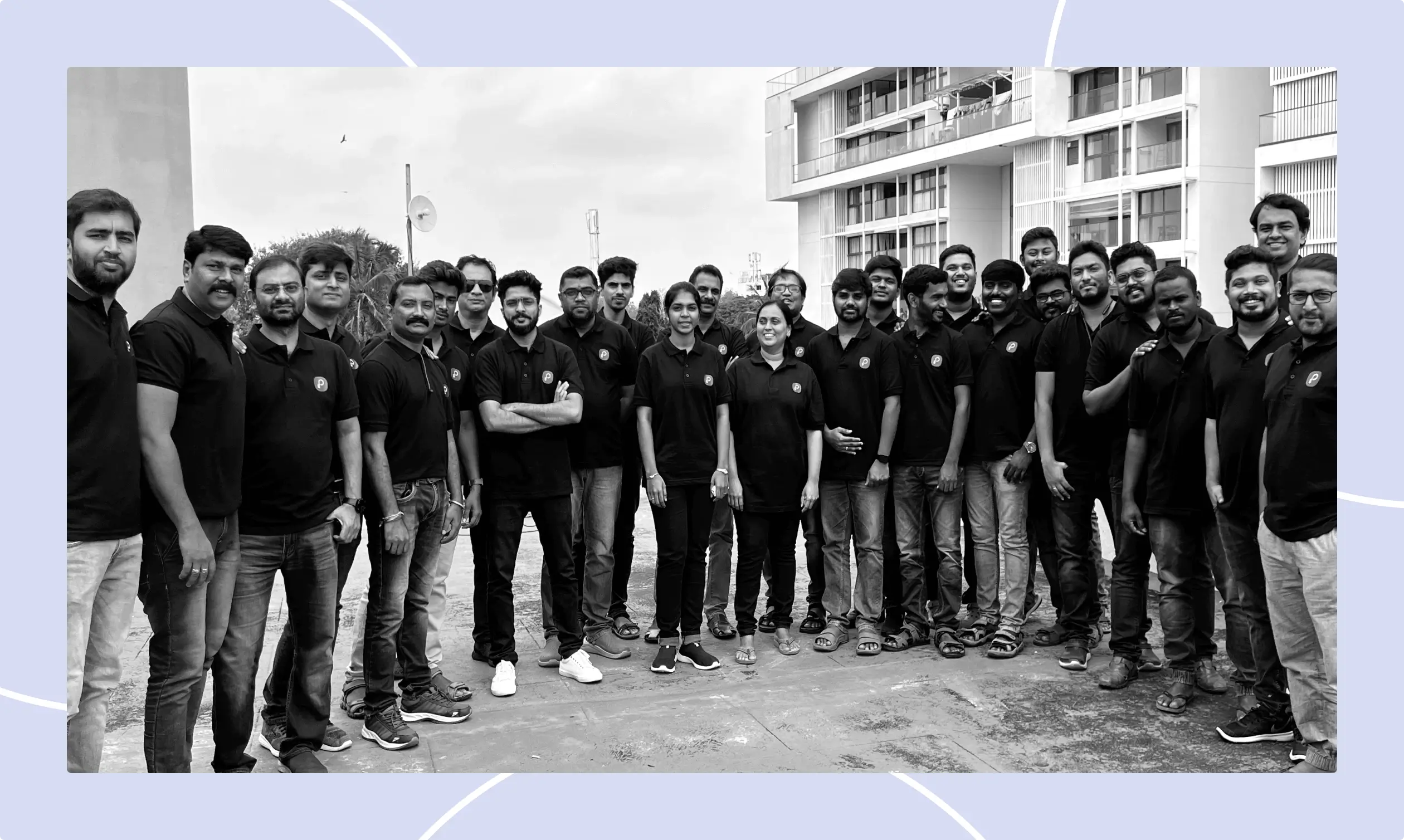


You know what's cool? One million users.
If you are a productivity startup targeting prosumers, hitting the one million users milestone represents a rite of passage — a strong signal that you're on your way to product-market fit. The pace at which you achieve this milestone is the second dimension that matters. The quicker you get there, the stronger the pulse of your business.
While history has seen several fast-growing prosumer technology companies — Slack, Zoom, Dropbox, Notion — the mantle of being the "fastest growing productivity app of all-time" belonged to Tome, an AI storytelling platform that hit one million users in six months from launch. But this was in February 2023. Since then, a small and largely unknown startup did it in half the time. That startup was ours.
Presentations AI launched on July 7, 2023, and hit one million users on September 23, 2023. That's 1 to 1 million users in just 84 days — less than three months, nearly twice as fast as the previous record holder.
To put that in perspective:
- Slack took 1.5 years
- Zoom needed 2 years
- Notion required 3 years
Our growth wasn't just fast. It was hypersonic. But speed isn't everything — the real story is how we got there and what came next.
A few things worth noting upfront:
- We didn't use any of the commonly accepted launch-and-scale methods. No ProductHunt launch, no viral demo videos, no influencer hype train.
- We didn't have a marketing team, a sales team or a product team. We don't have a single member in any of these functions to this day.
- We didn't spend anything on marketing - our total customer acquisition cost to acquire these users was zero.
I would have loved to claim that these facts prove that we are marketing savants but that would be disingenuous.
I'd love to claim this proves we're marketing savants. That would be disingenuous. The truth is we were frugal not by choice but by necessity — we'd raised a small round years earlier and had nearly run out of money by the time we were ready to launch.
So how did a broke, unknown startup become the fastest growing productivity app of all time?
The answer distills to three steps — simple to describe, genuinely hard to execute.
- Make something people (really) want
- Make something people love
- Make people want something
Make Something People (Really) Want
Paul Graham of YCombinator famously said that the most important thing that your startup can do is "make something people want". In fact, this remains the YC motto to this day.
Easy to recognize as true. Far harder to apply in the real world.
Take our case as an example.
We are an AI-powered presentation platform.
Look for problems, not ideas.
In a world drowning in presentation tools, did users really need another one? While there are billions of users of Microsoft PowerPoint and Google Slides, how many of them do you believe "want" a new presentation tool?
The startup graveyard is filled with "PowerPoint killers" that ended up more like PowerPoint paper cuts - mildly irritating but ultimately forgettable.
We realized the real unsolved problem wasn't about killing PowerPoint, but about euthanizing the blank slide. People struggle to start from scratch each time they need to create a presentation. Tools like PowerPoint conflate content and design - this makes it difficult for non-designers to conceptualize and convert their thoughts and stories into a visual summary. The irony of PowerPoint is that it is the world's most widely-used design tool…but its users are primarily non-designers.
Sometimes, being early is the same as being wrong.
Long before AI was cool, we had the idea of using it to help people with two aspects of presentation creation:
- Generate a first draft automatically (solving the blank slide problem)
- Automatically match content to appropriate slide templates, visual metaphors, and brand guidelines (so users don't need to be designers to create compelling presentations)
We built this AI platform for years in a pre-GPT world. It was like trying to build a spaceship with stone tools and a vague understanding of gravity. There was no ecosystem — from ML models to data pipelines, we built everything from scratch.
The time came to recognize and capitalize on market shifts.
The generative AI tsunami hit. Suddenly, our headwind became a tailwind. It was like we'd been pushing a boulder uphill for years, and someone suddenly installed rocket boosters on it.
Not only did the missing pieces in the technology puzzle fall in place, there was another enormous tailwind in terms of consumer interest in a solution like ours which pushed our CAC down to zero.
By the time we launched our public beta in July 2023, there were literally thousands of people knocking on our doors.
Our domain name - www.presentations.ai - transformed overnight from something that people didn't understand or care about to something that thousands of people "wanted" and searched for. From painstakingly having to explain our approach and value proposition, our domain name became a self-sufficient way for potential customers to understand what we offered.
The snapshot below illustrates how much interest there was at the top of the funnel for our solution compared to our peers, almost all of whom were far more heavily funded and higher profile than us:
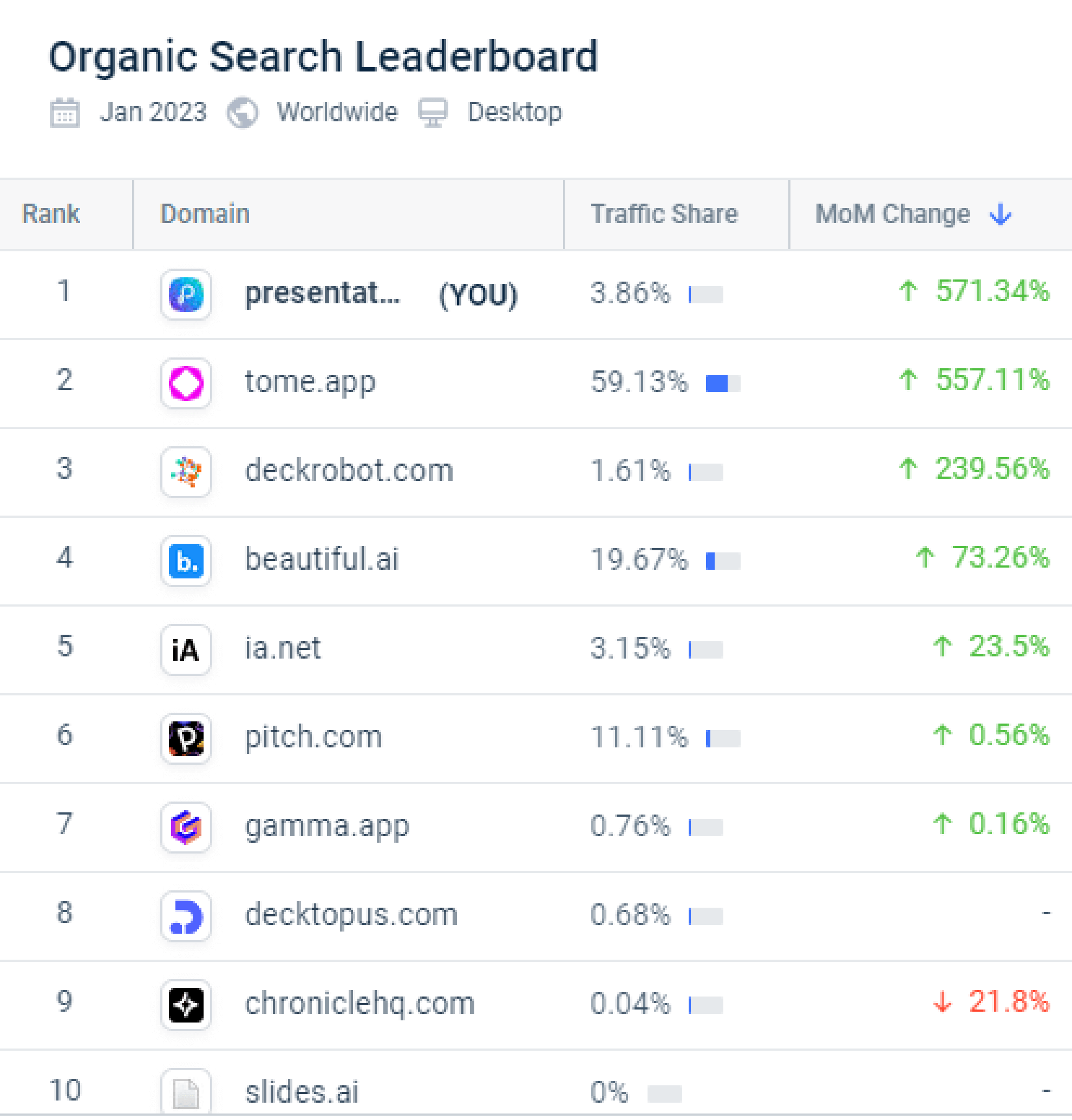
Picture: Organic Search Leaderboard for our market in early 2023
We witnessed first-hand how market conditions can change rapidly, turning what was your crazy idea for years into the next big thing almost overnight.
Chalk this up to amazing prescience or just plain luck but we ended up making something people want…but that in itself is a condition that is necessary but not sufficient.
What next?
Make Something People Love
Solving a problem is one thing. Creating an experience people genuinely look forward to is another.
How many people wake up excited to work on their presentations? "Death by PowerPoint" is a widely shared sentiment. There are entire communities dedicated to "PowerPoint Hell" — people who'd rather endure a dental appointment than build a deck.
We were determined to change that narrative.
How do we transform the business-critical act of creating presentations from pain to pleasure? Convert a mere tool to a beloved part of our users' jobs and workflows. That's the question we asked ourselves before writing a single line of code.
Our journey began not in a boardroom or a garage, but in countless coffee shops, office spaces, and conference rooms where people struggled with their presentations.
We observed. We listened. We empathized. And what we found was eye-opening:
- Executives spending hours on design choices instead of refining their message
- Teachers losing sleep over creating engaging slides for students
- Salespeople scrambling to update pitch decks minutes before crucial meetings
These weren't just minor inconveniences; they were productivity sinkholes costing businesses billions in lost time and missed opportunities.
So we set out to solve these problems, not by creating a marginally better slideshow tool, but by reimagining the entire presentation creation process.
We asked ourselves:
- What if presentations could build themselves from your talking points?
- What if design decisions were automated, guided by the principles of great communication?
- What if updating a deck was as easy as having a conversation?
These questions led us to make AI the foundation of our product — not a feature, not a buzzword. Our AI doesn't just assist. It collaborates. It doesn't just format. It thinks alongside you, anticipating needs and making improvements in real time.
The result? A tool that doesn't just help you make presentations—it helps you think better, communicate clearer, and present with more confidence than ever before.
From "Death by PowerPoint" to "Love you Forever". That shift matters more than any feature we've ever shipped.
Make People Want Something
Creating a beloved product is only half the battle.
The real magic happens when you empower people to achieve things they never thought possible.
We obsessed over every pixel, every interaction, every moment in the user journey. Our mantra was simple: "If it requires a manual, it's too complicated."
- We introduced an AI-powered onboarding that adapts to each user's skill level and needs
- We created smart templates that evolve based on user behavior and industry trends
- We implemented a "magic wand" feature that instantly transforms boring slides into captivating visual stories.That feature now sits inside our AI Slide Creator, which takes any rough draft (even bullet points pasted from a doc) and rebuilds it as a coherent visual story without manual design work.
The result? Users often tell us they've created the best presentation of their lives within minutes of signing up.
This approach also made our users feel like they were part of something bigger — a movement to revolutionize the way the world communicates ideas.
They weren't just users. They were the first million pioneers.
Turns out that making people want something is a far more powerful flywheel than merely making something people want.
Hikayenin Dönüm Noktası
İdeal bir dünyada, hikaye burada biterdi.
Tüm zamanların en hızlı büyüyen üretkenlik uygulaması… sevilen araç… sadık kullanıcılar… girişim başarısı… mutlu sona ulaşmak… sonsuza dek mutlu yaşamak.
Maalesef, pek de öyle değil.
Bu hikayenin kötü adamı, bizim "yapay zekanın üç cisim problemi" olarak tanımladığımız şeydi.
İşte böyle çalışıyor.
Yapay Zekanın Üç Cisim Problemi — ve Biz Onu Nasıl Çözdük
Her yapay zeka girişimi üç zorlukla karşılaşır:
- Anlamlı bir değer önerisi sunan, benzersiz, önemsiz olmayan bir uygulama geliştirmek
- Büyük bir pazarlama bütçesi olmadan dağıtım sağlamak
- Birim ekonomisini işler hale getirmek
İlk iki zorluk tüm girişimler için geçerli olsa da, üçüncüsü özellikle yapay zeka girişimleri için geçerlidir.
Kendi özel durumumuzla açıklayayım.
Yukarıdaki görsele dikkat ederseniz, Ocak 2023'te insanların bizimki gibi bir araca nasıl da hevesli olduğunu gösteriyor. Ancak halka açık beta sürümümüzü Temmuz 2023'e kadar başlatmadık.
Neden mi?
Ocak 2023'te, tek bir sunum oluşturmanın yapay zeka hesaplama maliyeti 2 dolardı — sadece LLM metin üretimi için. DALL-E aracılığıyla görüntü üretimini de eklediğinizde, bu maliyet sunum başına 10 dolara ulaşıyordu. Bir milyon kullanıcı, her biri bir sunum oluştursa: sadece yapay zeka maliyetleri 10 milyon dolar. Bu da elbette, sahip olduğumuzdan tam 10 milyon dolar daha fazlaydı.
Yani diğer tüm açılardan hazır olsak da, beta sürümümüzü başlatmayı bile göze alamıyorduk.
Şaşırtıcı olmayan bir şekilde, bu durum rakiplerin bu yapay zeka sunum fırsatından yararlanmasına olanak sağladı. Örneğin, daha önce rekor kırarak en hızlı büyüyen üretkenlik uygulamasıolarak ortaya çıkan Tome. Tome, beta sürümünü 2022'nin başlarında piyasaya sürmüş olsa da, o zamanlar tam olarak sıfır referans yapay zekayasahipti. Ancak, iki güçlü varlığı vardı: 37 milyon dolarlık fon ve Reid Hoffman (eski LinkedIn kurucusu, OpenAI yönetim kurulu üyesi ve Greylock yatırımcısı) gibi isimlerin desteği. Tome, bu kaynakları kullanarak yapay zekayı entegre etti orijinal ürününe ve kullanıcı büyümesini hızlandırdı. Ardından bu ilgi ve ivmeyi başarıyla kullanarak fon havuzuna ek 43 milyon dolar daha ekledi.
Çok iyi finanse edilen bir rakibi eleştirmeye çalışmak anlaşılır olsa da, Tome'un fon toplama becerilerini takdir ediyor ve onlara şapka çıkarıyoruz – diğer birçok startup alanında olduğu gibi, fon toplama da birkaç kurucunun çoğumuzdan çok daha iyi başarabileceği önemli bir beceri ve zanaattır ve bunun değeri bilinmelidir.
Bu dönemde fon toplamaya çalıştık ama bizim için çok daha zordu – kısmen erken aşama risk sermayesi yatırımcılarını bulmanın daha zor olduğu Hindistan'da olmamızdan, kısmen de yıllardır üzerinde çalışmamıza rağmen gösterecek pek bir şeyimizin olmamasından kaynaklanıyordu.
Peki, kaynağı olmayan küçük bir startup böyle bir yapay zeka pazarında nasıl rekabet eder?
Başlangıç olarak, sadece bekledik.
Büyük Dil Modelleri (LLM'ler) tarihteki en hızlı değer kaybeden varlıklardır – Ocak 2023'ten Temmuz 2023'e kadar bu hizmetlerin maliyetleri önemli ölçüde düştü. Elbette, özellikle daha büyük bağlam pencereleri ve daha yeni, daha güçlü modeller için hazırlık yapmanız gerektiğinde maliyetler hala azımsanmayacak düzeydeydi.
Ancak Temmuz 2023'e gelindiğinde, halka açık beta sürümümüzü nasıl başlatacağımızı ve bu süreçte iflas etmeden nasıl büyüyeceğimizi çözmüştük.
Yapay Zeka Zorluğu: Yenilik ve Ekonomiyi Dengelemek
Yapay Zeka Süreçlerini ve Maliyetlerini Optimize Etmek
Birim ekonomimizin işlemesini sağlamak için şunları yaptık:
- Yapay zeka süreçlerimizi sürekli olarak optimize ederek, kaliteden ödün vermeden token kullanımını azalttık
- Pahalı hesaplamaları yeniden kullanmak ve azaltmak için akıllı önbellekleme ve orkestrasyon stratejileri uyguladık
- Belirli görevler için kendi ince ayarlı modellerimizi geliştirerek, daha pahalı genel amaçlı modellere olan bağımlılığımızı azalttık
Bu kombinasyon sayesinde, bir sunum oluşturmanın maliyetini deste başına sadece 2 sente düşürmeyi başardık. 2 sentlik bir birim maliyetin 10 dolardan çok daha iyi olduğu açık olsa da, her ay milyonlarca sunum oluşturulduğunda hala önemli bir miktardır.
Bunu çözmek için, pek de bariz olmayan iki strateji benimsedik.
Sonuç İçin Ücretlendirme, Araç İçin Değil
Giderleri çözmenin en kolay yolu, çözümünüzden para kazanmak ya da en azından para kazanmaya çalışmaktır.
Bizimki gibi profesyonel tüketici (prosumer) SaaS çözümleri için kabul görmüş yöntem, kullanıcıların ürünü önceden deneyimleyebileceği ve ardından kullanıcı tabanınızın küçük bir kısmını zamanla premium ücretli bir sürüme dönüştürebileceği cömert bir ücretsiz katman sunan bir freemium modelidir.
Ancak, söz konusu yüksek yapay zeka maliyetleri göz önüne alındığında, başarımız kullanıcılara değerimizi göstermek ile onları mümkün olduğunca çabuk yükseltmeye ikna etmek arasında bir denge bulmaya bağlıydı.
Ancak bizim pazarımızda bu söylemesi kolay, yapması zor bir durumdur. Microsoft PowerPoint ve Google Slaytlar gibi mevcut araçlar son kullanıcılar tarafından büyük ölçüde ücretsiz olarak algılanmaktadır. Bu yüzden, müşterilerin kredi kartlarını çıkarmasını istiyorsanız aşılması gereken yüksek bir çıta var.
Ancak yolculuğumuzda çok hızlı öğrendiğimiz değerli bir ders şuydu ki, kullanıcılardan aracınız için aylık 10 ila 20 dolar gibi sabit bir ücret almaya çalışmak anlamsızdır. Birincisi, çözümünüzün değerini düşürür ve ikincisi ise, bu kadar önemsiz bir ücretle büyük ve anlamlı bir iş kurmak neredeyse imkansızdır.
Bugün, yeterince uzman, yapay zeka girişimleri için doğru para kazanma stratejisinin araçlar yerine sonuçlar için ücretlendirme yapmak olduğu görüşünü dile getirmiştir. Biz bunu ilginç bir şekilde kendi başımıza erken fark ettik. Çözümümüz yapay zeka yönlerinin ötesinde (işbirliği ve zengin medyalı, grafik ağırlıklı şablonlar gibi özellikler) birçok açıdan çok güçlü olsa da, müşterilerimizin en çok istediği ve değer verdiği sonuç çok daha sıradandı: desteleri PowerPoint'e aktarmanın bir yolu!
Bir desteyi PowerPoint'e aktarmak için 25 dolar ücret alarak başladık. Önemli bir talep gördük. Ardından fiyatı ihracat başına 49 dolara çıkardık. Sipariş sayısında gözle görülür bir düşüş olmadı. Tekrar ikiye katlayarak PowerPoint ihracatı başına 99 dolara çıkardık ve yine dönüşümde bir düşüş yaşanmadı. Bizim Yapay Zeka PowerPoint Oluşturucu bu dışa aktarma akışını güçlendiren şeydir; yapay zeka tarafından oluşturulmuş bir desteyi alarak, nasıl oluşturulduğuna dair görünür hiçbir iz bırakmadan kullanıcıların düzenleyebileceği, paylaşabileceği veya devledebileceği temiz bir PPT dosyasına dönüştürür.
Fark ettik ki, insanlar PowerPoint ile rekabet eden bir araç için 10 dolar bile ödemekte isteksiz olabilirler ancak onlara saatlerce süren çaba ve zahmetten kurtaran tek bir iyi tasarlanmış PowerPoint için 99 dolar ödemekten fazlasıyla mutlular. Geriye dönüp bakıldığında bariz görünüyor ama o zamanlar bizim için bir aydınlanmaydı.
Daha sonra, kullanıcıların yılda 100 adede kadar PowerPoint dosyası oluşturmasına ve dışa aktarmasına olanak tanıyan bir Pro planı tanıttık; bunu yıllık 198 dolar olarak fiyatlandırdık – tek bir PowerPoint dışa aktarımının sadece 2 katı fiyatına. Bu kademeli fiyatlandırma ve değer sunumu müşterilerde karşılık buldu ve on binlerce satın alma gördük.
Uygulamamızda güçlü paylaşım yeteneklerimiz olmasına rağmen, başlangıçta tahmin ettiğimiz kadar sık kullanılmadığı da ilginç bir öğrenimdi. Anlaşıldı ki kullanıcılarımız, varlığımızı akranlarının bilmesini istemiyordu; bu, tabiri caizse onların "gizli silahıydı" ve yapay zeka yeteneklerimizin sıfır iziyle normal bir PowerPoint'e aktarmak için 99 dolar ödemek, bu avantajdan yararlanmaya devam etmek için küçük bir bedeldi. "Anti-viralliğin" uygulanabilir bir iş modeli olabileceğini kim düşünebilirdi ki!
Kasıtlı Olarak Yavaşlatılmış Büyüme
Geleneksel startup bilgeliği, piyasanın büyümeyi ödüllendirdiğini söyler; hızlı büyüyen startup'lar büyük fonlamalar ve daha yüksek değerlemelerle tanınır ve ödüllendirilir. Ancak söylenmeyen şey, bu kuralın yalnızca startup'ların en üst %1-2'si için geçerli olduğudur; yani doğru referanslara sahip, "soylu" VC destekli kurucular tarafından kurulanlar için.
Geri kalanımız farklı bir oyun oynamak zorunda.
Özellikle dokunaklı bir VC görüşmesini hala hatırlıyorum. Baş döndürücü büyümemizin ortasında, bir VC'ye sunum yaptım, hem de Harvard MBA mezunu. Tüm zamanların en hızlı büyüyen üretkenlik uygulaması olmak üzereydik, ancak bize hala çok erken olduğu ve "daha fazla çekiş" göstermemiz gerektiği söylendi, üstüne de zorunlu "nasıl yardımcı olabileceğimi bana bildirin" geçiştirmesi!
VC destekli büyüme modelinin neredeyse tamamen elendiği göz önüne alındığında, iş modeli matematiğini tutturmak için bazı zorlu seçimler yapmak zorunda kaldık.
Aldığımız büyük kararlardan biri büyümeyi kısıtlamaktı. Bu, hızlı büyümeden bahseden bir yazıda daha da çelişkili görünebilir. Ama bu çılgınlığın arkasında bir yöntem vardı.
Kullanıcı tabanımızı büyütürken edindiğimiz temel öğrenimlerden biri, yapay zeka hype'ının hem bir nimet hem de bir lanet olduğuydu. Müşteri edinme maliyetlerinizi düşürürken, ürününüzü asla satın alma niyeti olmayan bir sürü "yapay zeka turisti" de getiriyor. Bu ücretsiz kullanıcılara hizmet vermenin önemsiz olmayan bir maliyeti olduğu göz önüne alındığında, bilançonuzda bir kara delik oluşturuyorlar.
Bu tür sıradan kullanıcıları elemek için bir dizi önlem uyguladık. Düşük niyetli kullanıcıları daha ucuz modellere yönlendiren bir değerlendirme sistemi geliştirdik. Belirli coğrafyalara ve kişiliklere sınırlar koyduk. Hatta kullanıcıları arkadaşlarını platformumuza davet ettikleri için ödüllendiren tüm sosyal ve teşvik özelliklerini kaldırdık.
Rakiplerimiz Tome ve Gamma, bir yıl içinde kullanıcı tabanlarını 1 milyondan 20-30 milyona çıkarırken, biz kasıtlı olarak daha yavaş ve daha düşünceli büyüdük.
Ama bu sayede çok daha mutluyuz.
Neden mi?
Önemli Olan Milyon
1 milyon kullanıcı havalı.
Daha havalısı ne biliyor musunuz?
1 milyon dolar gelir.
Bu bizim para kazanma hedefimizdi. Bir milyon kullanıcıya ulaşmamız sadece birkaç ay sürdü ama 1 milyon dolarlık yıllık yinelenen gelir (ARR) hedefine ulaşmamız bir yıl sürdü. Bu rakama ulaşmak bir gösteriş peşinde koşmak değildi; başa baş noktasına geldiğimiz ve nakit akışı bazında kârlı hale geldiğimiz noktaydı.
Haziran 2024'te bu rakama ulaştığımızdan beri, sonraki dönemde hızla büyüdük. Bileşik faizin gücünün farkında olsak da, bunu ilk elden görmek oldukça gerçeküstü.
Ama bu başka bir günün hikayesi.
Teşekkür Notu
Bir milyon iyi bir dönüm noktası olsa da, bu yolculuğumuzun sadece başlangıcı. İleriye baktığımızda, yapay zekanın üretkenlik araçlarındaki potansiyeli konusunda her zamankinden daha heyecanlıyız. Sunum oluşturmayı daha da sezgisel ve güçlü hale getirecek yeni özellikler üzerinde çalışıyoruz, bunlar arasında:
- Zahmetsiz içerik üretimi için gelişmiş doğal dil işleme - sıfır tasarım yükü
- Hedef kitle etkileşimi ve geri bildirimlerine göre gerçek zamanlı olarak gelişen sunumlar
- Bireysel, ekip ve şirket tercihlerine göre kişiselleştirilmiş içerik tasarım önerileri
- Herhangi bir uygulama, platform veya aracı çerçevesine gömülebilen sunum oluşturma yetenekleri.
Henüz denemediyseniz, bizim Yapay Zeka Sunum platformumuz ücretsizdir ve ilk bir milyon kullanıcının neden bu kadar çok kaldığını dakikalar içinde göreceksiniz.
Dünyanın sunum oluşturma ve sunma şeklini dönüştürme misyonumuza yeni başlıyoruz. Yaşadığımız hızlı büyüme, bu alandaki inovasyon ihtiyacının bir kanıtıdır ve mümkün olanın sınırlarını zorlamaya devam etmeye kararlıyız.
Tüm bunlar harika kullanıcılarımız, özverili ekibimiz ve sabırlı yatırımcılarımız olmadan mümkün olmazdı. Bu yolculuğun bir parçası olan herkese - ister ilk günden beri bizimle olun ister dün katılmış olun - teşekkür ederiz. Güveniniz, geri bildirimleriniz ve coşkunuz bizi ileriye taşıyor.
Geleceğe baktığımızda, daha fazla hikaye ve öğrenim paylaşacağımıza ve sizi bu yolculuğa bizimle devam etmeye davet ettiğimize söz veriyoruz. Birlikte, sadece sunumların nasıl yapıldığını değiştirmekle kalmıyor; yapay zekanın herkesi fikirlerini etkili ve kolay bir şekilde iletme konusunda güçlendirdiği üretkenlik yazılımlarında nelerin mümkün olduğunu yeniden tanımlıyoruz.
Büyüme zamanı!